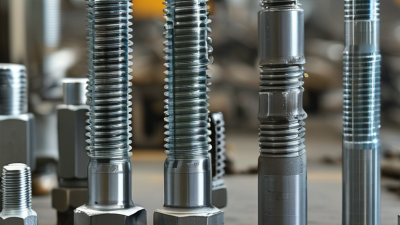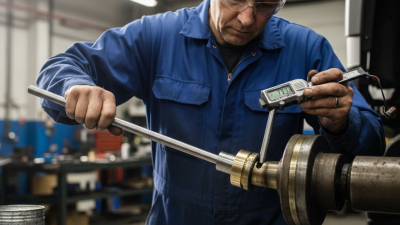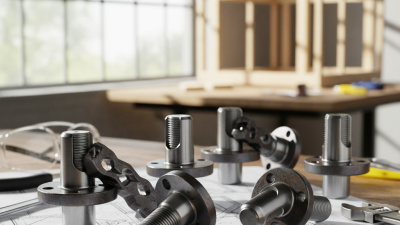
Selecting reliable manufacturers for a heavy-duty Truck Wheel Bolt requires more than comparing catalog prices. This guide examines ten established Chinese suppliers through practical purchasing criteria, including material selection, forging capability, thread accuracy, heat treatment, surface protection, and quality inspection. These details affect wheel alignment, clamping force, and long-term service performance. Small errors matter.
The manufacturers discussed here may serve truck, trailer, bus, agricultural, and construction equipment markets. Their capabilities can differ widely. Some focus on high-volume standard bolts, while others provide customized dimensions, special coatings, or OEM packaging. Factory audits, sample testing, production records, and traceable inspection reports deserve careful attention. A polished website is not enough. Buyers should also confirm tensile strength, hardness, thread gauges, salt-spray results, and actual delivery consistency.
This introduction is based on common industrial sourcing practices and the technical factors used by experienced fastener buyers. It does not treat “top” as an absolute ranking. Performance depends on application, axle design, operating loads, and regional standards. A supplier with strong export experience may still require closer verification for a specialized truck model. That is worth remembering. The final selection should include independent sample approval and clear technical communication. China remains a major manufacturing base for wheel fasteners, but supplier quality is not uniform. Careful comparison reduces risk and supports safer, more predictable fleet maintenance.
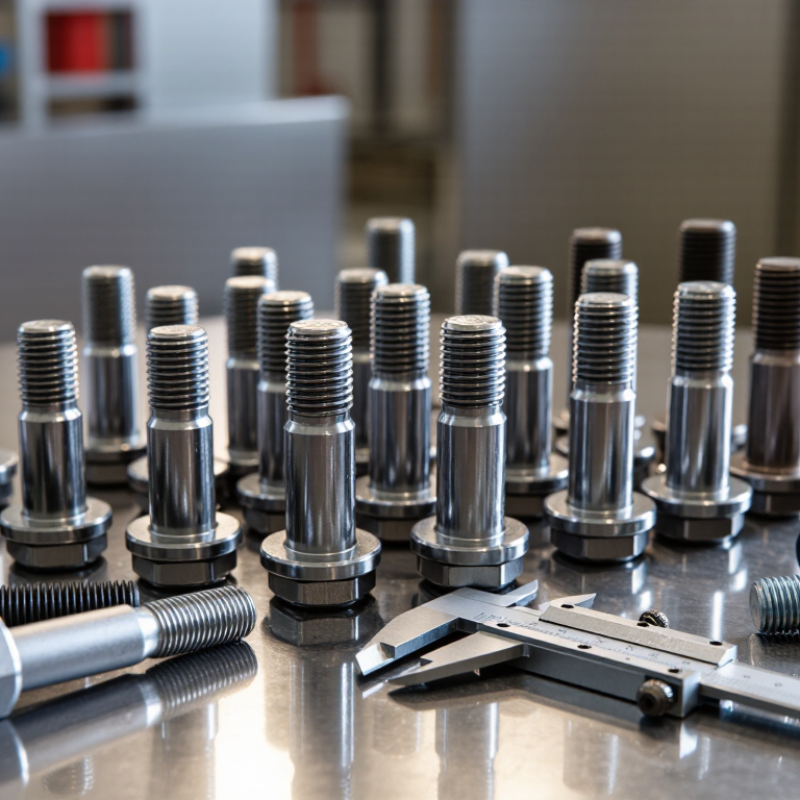
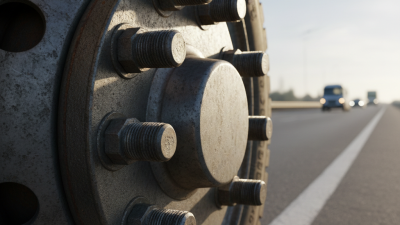
China’s truck wheel bolt sector deserves attention because the bolt is a small part with a major safety function. It clamps the wheel, hub, and brake assembly together under repeated torque, vibration, heat, and impact. They carry serious loads. A failed bolt can cause uneven clamping, wheel movement, or roadside downtime.
The European Automobile Manufacturers’ Association reported that new medium and heavy truck registrations in the European Union increased by 16.3% in 2023. More vehicles mean greater demand for reliable replacement hardware and production components. Grand View Research valued the global automotive fasteners market at approximately USD 25 billion in 2023, with continued growth expected through 2030. These figures support closer evaluation of China’s top ten truck wheel bolt manufacturers, especially their material control, testing capacity, and traceability.
A proper wheel bolt assessment should examine grade markings, thread accuracy, tensile strength, hardness, coating thickness, and fatigue resistance. ISO 898-1 provides mechanical property requirements for carbon steel and alloy steel fasteners. SAE J2530 also offers guidance for replacement wheel fasteners. Torque matters, but torque alone is not enough. Installation tools, thread cleanliness, and hub condition can change clamping force substantially. I have seen specifications appear complete while overlooking actual wheel-seat compatibility. That assumption needs challenging. No catalog can replace a measured fit check, documented inspection, and controlled testing under realistic commercial-vehicle conditions.
China Top 10 Truck Wheel Bolt Manufacturers?
A credible ranking needs more than factory photographs or product counts. China Association of Automobile Manufacturers reported over four million commercial vehicles in 2023. This demand raises the importance of stable wheel-bolt supply, not simple output volume. The ranking should examine production capacity, delivery consistency, and experience with heavy-duty applications.
Mechanical performance deserves the highest weight. Testing should follow GB/T 3098.1 and ISO 898-1 requirements for tensile strength, hardness, and fatigue resistance. Wheel bolts face repeated loads, vibration, moisture, and sudden braking. Traceable heat numbers and batch records provide stronger evidence than unsupported certificates. Torque testing matters too. Small deviations can affect clamping force.
Quality systems should receive a separate score. IATF 16949 certification, calibrated equipment, process capability data, and documented nonconformance rates reveal manufacturing discipline. Surface treatment also needs inspection, especially for corrosion resistance and thread accuracy. According to CAAM production data, commercial vehicle demand remains substantial, but public supplier data is uneven. That weakens comparison.
A practical ranking could assign 35% to verified mechanical testing, 25% to quality systems, 20% to delivery performance, and 20% to engineering support. Customer references should be checked carefully. They can be selective. Factory audits, sample retesting, and failure-analysis records help reduce this bias. Price should not dominate the score. Cheap bolts can become expensive after field failures. The method is not perfect, but transparent evidence is more reliable than reputation alone.
China’s top truck wheel bolt manufacturers differ in equipment, specialization, and quality control. The first profile represents a large forging plant using automated heading lines and multi-stage forming. Its strength is high-volume production, though customization may move slowly. The second focuses on heat treatment, controlling hardness through sampled furnace records. The third supplies heavy-duty bolts for mining and construction fleets, where vibration resistance matters. The fourth combines cold forging with precision thread rolling. Its threads feel clean and uniform under inspection.
The fifth manufacturer serves export distributors and maintains broad metric size coverage. It usually provides certificates, material reports, and batch traceability. The sixth specializes in customized lengths and flange designs. This suits older truck models, but small orders can carry higher tooling costs. The seventh operates a laboratory for tensile, torque, and salt-spray testing. Test reports are useful evidence, not magic. The eighth focuses on surface finishing, using controlled coating thickness to reduce corrosion around wheel nuts.
The ninth profile is a mid-sized factory with flexible production scheduling and direct engineering support. It may respond faster than a larger supplier, although its documentation can be less polished. The tenth combines machining, forging, and final inspection under one roof. This can shorten lead times and improve process control. Buyers should check thread accuracy, dimensional consistency, fatigue performance, packaging, and lot identification. A bright finish alone proves little. Factory audits, sample testing, and clear technical drawings remain essential. Some supplier profiles appear impressive online, but real performance still depends on inspection discipline and honest communication.
A credible top-ten comparison should measure more than price. OICA’s 2023 report recorded 93.5 million motor vehicles worldwide, supporting steady demand for safety-critical fasteners. Truck wheel bolts need controlled hardness, accurate threads, and stable clamping force. ISO 898-1 provides a useful benchmark for mechanical properties, while IATF 16949 shows stronger automotive quality discipline. ISO 9001 alone is not enough.
Factory capacity also needs evidence. Compare forging lines, heat-treatment furnaces, inspection equipment, and documented monthly output. Ask for batch traceability, PPAP files, dimensional reports, and fatigue-test records. A supplier may claim high capacity, yet long lead times can expose weak planning. That detail matters.
Export reach requires careful reading. UN Comtrade 2023 data under HS 7318 can indicate international fastener shipments, but this code includes many products beyond wheel bolts. That is an inconvenient limitation. Buyers should request destination-country records, customs experience, packaging controls, and replacement-part response times. Certifications should be verified through issuing bodies, not copied logos. Testing should cover coating thickness, torque-tension behavior, and corrosion resistance. In field inspections, small thread damage often creates larger maintenance problems. I would also score transparency, because incomplete test data is itself a risk. The strongest manufacturers therefore combine measurable quality, audited systems, scalable production, and proven cross-border delivery.
Anonymous comparison of China-based truck wheel bolt suppliers using commonly disclosed product, quality, manufacturing, and export indicators.
| Supplier | Typical Product Range | Common Material Grades | Strength Classes | Surface Treatment Options | Quality & Certification Indicators | Production Capability | Export Reach | Overall Assessment |
|---|---|---|---|---|---|---|---|---|
| Manufacturer 01 | Truck wheel bolts, nuts, studs, U-bolts, and customized fasteners | 40Cr, 35CrMo, 42CrMo, and equivalent alloy steels | Class 10.9; selected applications up to 12.9 | Zinc platingBlack oxidePhosphate | ISO 9001 quality system; dimensional inspection; hardness and tensile testing | Cold heading and hot forging; CNC thread rolling; in-house heat-treatment capability commonly available | Asia, the Middle East, Europe, South America, and Africa | ★★★★★ Strong balance of product range, process control, and export readiness |
| Manufacturer 02 | Heavy-duty wheel studs, flange bolts, wheel nuts, and axle fasteners | 40Cr, 35VB, 42CrMo, and carbon-alloy steel grades | Class 10.9 and 12.9 for selected custom designs | DacrometGeomet-type coatingZinc | ISO 9001; PPAP and material traceability available for qualified projects | Multi-station forming, automatic thread rolling, and batch heat treatment | North America, Europe, Southeast Asia, and the Middle East | ★★★★★ Well suited to high-volume commercial vehicle programs |
| Manufacturer 03 | Metric and inch wheel bolts, left-hand/right-hand threads, and special studs | 40Cr, 10B21, 35CrMo, and comparable grades | Class 8.8, 10.9, and application-specific higher-strength grades | BlackeningElectro-zincPhosphate | ISO 9001; in-process gauge inspection; salt-spray testing may be available by order | Flexible production setup for standard and low-to-medium volume custom parts | Asia, Eastern Europe, Africa, and Latin America | ★★★★☆ Good choice for mixed specifications and customized thread requirements |
| Manufacturer 04 | Wheel bolts for trucks, trailers, buses, agricultural vehicles, and construction equipment | 35CrMo, 42CrMo, 40Cr, and high-carbon alloy steel | Class 10.9; fatigue-oriented designs available for selected applications | Zinc flakePhosphateOil coating | ISO 9001; laboratory testing for torque, hardness, tensile strength, and thread accuracy | Forging, machining, heat treatment, and sorting processes can be integrated | Europe, Australia, North America, and the Middle East | ★★★★☆ Competitive for safety-critical and trailer-related applications |
| Manufacturer 05 | Standard truck wheel studs, conical-seat nuts, flange nuts, and repair kits | 40Cr, 45 steel, 35CrMo, and equivalent materials | Class 8.8 and 10.9 | Zinc platingBlack oxidePlain oiled | ISO 9001 commonly stated; batch inspection and certificate of conformity available | Suitable for repeat production of standard sizes; capacity varies by specification | Domestic China market, Southeast Asia, Africa, and South America | ★★★★☆ Practical option for standard replacement and aftermarket programs |
| Manufacturer 06 | Long wheel bolts, wheel studs, hub bolts, and non-standard fasteners | 35CrMo, 42CrMo, 40Cr, and customized alloy steel grades | Class 10.9; engineered grades subject to drawing and testing requirements | Zinc flakeDacrometPhosphate | ISO 9001; first-article inspection and dimensional reports available for OEM-style orders | Strong custom-machining capability; suitable for small and medium production batches | Europe, North America, Japan, South Korea, and Southeast Asia | ★★★★☆ Best suited to engineering projects requiring drawing-based production |
| Manufacturer 07 | Commercial vehicle wheel bolts, nuts, studs, and chassis fasteners | 40Cr, 35CrMo, 20MnTiB, and other alloy-steel options | Class 10.9 and selected 12.9 products | Electro-zincBlack oxideZinc flake | ISO 9001; RoHS/REACH documentation may be supplied where required by market | Automated forming and thread rolling for standard parts; custom capacity depends on tooling | Europe, the Middle East, Africa, and Southeast Asia | ★★★★☆ Suitable for distributors seeking a broad commercial vehicle catalog |
| Manufacturer 08 | Truck and trailer wheel studs, left-hand-threaded parts, and wheel nut assemblies | 40Cr, 45 steel, 35CrMo, and comparable grades | Class 8.8 and 10.9 | PhosphateZincBlack oxide | ISO 9001; routine hardness, dimension, and visual inspections | Small-to-medium batch production with flexible packaging and labeling services | South America, Africa, Central Asia, and domestic China | ★★★☆☆ Cost-effective for aftermarket orders with moderate technical complexity |
| Manufacturer 09 | Heavy truck wheel bolts, flange nuts, hub studs, and high-strength fastener sets | 42CrMo, 35CrMo, 40Cr, and boron-alloy steel options | Class 10.9; higher grades subject to validation and application review | Zinc flakeGeomet-type coatingPhosphate | ISO 9001; traceability, process control plans, and test reports available for contract orders | Integrated forging, machining, heat treatment, and automated inspection for selected lines | North America, Europe, Australia, the Middle East, and Asia | ★★★★☆ Strong potential for corrosion-sensitive and heavy-duty applications |
| Manufacturer 10 | Standard and customized truck wheel bolts, nuts, studs, and repair components | 40Cr, 35CrMo, 42CrMo, and customer-specified steel grades | Class 8.8, 10.9, and selected high-strength specifications | Electro-zincBlack oxidePhosphate | ISO 9001; inspection certificates and pre-shipment sampling commonly available | Broad supplier network with standard tooling; production capacity is specification-dependent | Asia, Africa, Latin America, Eastern Europe, and the Middle East | ★★★☆☆ Flexible sourcing option for price-sensitive export and replacement markets |
When comparing China’s top truck wheel bolt manufacturers, supplier reliability matters more than a polished website. I have learned to start with traceable production evidence, not promises. Ask for factory photos, process flow, and recent inspection records. A dependable supplier should identify steel grade, thread specification, heat-treatment method, and plating thickness. These details should match your drawings. Vague answers create expensive delays.
Request samples from the same production line used for bulk orders. Check thread fit with a calibrated gauge, flange dimensions with a micrometer, and surface defects under strong light. A third-party laboratory can verify tensile strength, hardness, and chemical composition. Ask how the supplier controls furnace temperature and lot separation. Small records matter. They reveal whether quality is repeatable. Also review packaging, including separators, moisture protection, labels, and lot numbers. Damaged threads can turn a good batch into wasted inventory.
Communication is another practical test. Send a technical question and observe the response time and precision. Reliable teams confirm tolerances instead of guessing. They also explain corrective action when a sample fails. No supplier is perfect. I once treated fast replies as proof of competence, which was a weak assumption. Audit capacity, export experience, production lead time, and after-sales responsibility before signing. A written agreement should define inspection rights, rejected-goods handling, and change approval. Choose the supplier whose evidence remains consistent when the questions become uncomfortable.
A reliable truck wheel bolt supplier should provide the correct mechanical property class, consistent batch quality, complete material certificates, dimensional inspection, and traceable production records. The chart compares the nominal minimum tensile strength defined for common ISO 898-1 carbon and alloy steel property classes. Actual selection must also match the truck manufacturer's specifications, thread size, seat design, and application requirements.
Reference: ISO 898-1 nominal tensile-strength values for property classes 8.8, 10.9, and 12.9.